Monday, January 12, 2015

Collaboration and Convergence: The Future of Medical Innovation


An interview with
Gary Fingerhut
Executive Director
Cleveland Clinic Innovations


As the Executive Director at Cleveland Clinic Innovations, Gary Fingerhut leads a team of professionals focused on commercializing technologies conceived by Cleveland Clinic Caregivers that make a real difference in improving patient care.

Frost & Sullivan recently spoke with Gary about some of the projects Cleveland Clinic Innovations is working on, as well as how collaborating across companies and industries is ultimately leading to better care. Gary will also join us to share his expertise at the 20th Anniversary Medical Technologies 2015: A Frost & Sullivan Executive MindXchange, March 18-20, 2015, in San Diego.

First, give us a little background on what Cleveland Clinic Innovations does.

Our main objectives include commercialization and technology transfer. So if you’re familiar with a typical tech transfer office, we take that to the next level and add commercialization by creating over 71 spin-off companies to date. We also have our Global Healthcare Innovation Alliance where we outsource our capabilities of commercialization and tech transfer to other organizations.

Another significant area of focus is the Medical Innovation Summit, which is our annual summit held in Cleveland with typically around 1700 global thought leaders in the area of healthcare innovation. This includes leaders such as investors, clinicians, alliances and corporate partnerships. Lastly, we have our Global Cardiovascular Innovation Center and NCAI, our NIH Center for Accelerated Innovation.

In each of our areas, we have three very simple business imperatives for why we do this. First, we want to commercialize or translate the technologies developed at the Cleveland Clinic and our Global Healthcare Innovation Alliance to the rest of the world to provide better patient care. Second, we’re a service organization, so we’re all about delivering exceptional inventor satisfaction and providing caregivers and partners with a solid and productive experience of commercialization. Then finally of course, we want to optimize some kind of financial return, so we can continue to reinvest and do more product development.

What are some of the most exciting things you’re working on?

Right now, we’re focused on four key areas, and we have a very large portfolio in each of these. The first is healthcare IT, which is growing exponentially. This includes any type of software application, digital health, and, though I hate to use the buzz word, Big Data, including a lot of clinical decision support and personalized medicine opportunities. There are also all of the digital apps in wellness arena.

The second area is devices, through our medical device incubator. About 60% of what we do is in the device space. The third is therapeutics and diagnostics. Those are usually longer-term innovations as we have a world-renowned research facility here and we get a lot of tremendous ideas from our Learner Research team.

Then our fourth area, which is relatively new from a commercialization perspective, is our delivery solutions group. That includes more process-oriented technologies. There’s a lot going on in the areas of bundled payments, reimbursement, care paths, and opportunities that enable us to do more with less.

You mentioned data in health IT. What are some of the roles data is playing in healthcare?

From an innovation perspective, we see a lot going on in the area of biometrics, wearables, and, as I mentioned, clinical decision support systems. All of this is leading into more personalized medicine and family medicine, where you’re managing the family tree and using hereditary and genomic data. The technologies are putting it all together to create a dashboard, not necessarily for a patient, but for a human, so we can do some predictive analysis prior to being a patient.

An example is one of our spin-offs, Explorys, which is our most successful Big Data venture.

There’s lot of discussion around trying to improve patient engagement and focus more on preventive care. What are some ways technology is helping move healthcare in that direction?

We have a tremendous amount of technologies in the patient engagement space. I’ll focus on one area, which is a product we have called MyFamily. It’s integrated with the EMR and tracks the patient’s family history around disease collection. That allows us to do risk stratification and bring it right to the point of care. It’s a clever technology that basically creates an awareness of the needs of the patient so the physician and the patient can see it and reach a higher quality of care. It’s very similar to what you’re hearing around, to use another buzz phrase, “doing more with less.” It allows you to collect data, increases patient engagement, and helps with identifying at-risk patients. MyFamily is a hot digital product that we’re really excited about.

Another thing we hear a lot about is the idea of convergence, where all the different areas of health and wellness are coming together. 

That’s very well in line with our strategy and processes which we refined in January 2014. We’re now taking more of a portfolio approach to managing these technologies. Historically, a tech transfer office would create a royalty-bearing license or spin off a new company around a specific technology. We now take this portfolio approach where our incubator directors align multiple technologies and hold on to them longer to de-risk them while increasing the total portfolio value. By combining multiple technologies, not only from the Cleveland Clinic but from all of our Global Healthcare Innovation Alliance partners, we’re building a much stronger portfolio.

We align those as well as with our partners, which include Parker Hannifin, Lubrizol, NASA, IBM, and others. We can bring together the intellectual property; capital, both human and financial, while mutually translating these at a higher value and provide better patient care.

What is the role collaboration plays in what Cleveland Clinic Innovations does?

We’re aligned to be the best partner in healthcare. That’s one of our goals. We’ve aligned ourselves with leaders in multiple industries, some of which you would not expect to be in the healthcare space. One example is Parker Hannifin’s fluid dynamics group. We’ve aligned with them because after all, it’s not unlike the human body. We’re able to take areas of their intellectual property that haven’t been applied to healthcare and, vice-versa, find areas of healthcare where they can take advantage in their other verticals.

We’ve done this in multiple areas. We’re also aligned with telecom companies that bring components that they have from an infrastructure perspective – they may have, say, a HIPAA-compliant cloud – that we can then leverage in healthcare. We also have our relationship with IBM in the Watson initiative, where were we take IBM Watson to medical school and teach Watson how to read the EMR. These are examples of creating new relationships that haven’t been developed in the past and embedding them in technologies that can eventually go to the bedside.

It’s really a tremendous opportunity; providing technologies to enable better patient care and make a difference in the world. It’s really a very exciting time for Cleveland Clinic Innovations.

Thursday, January 8, 2015

Patient Engagement and Adherence: New Technologies, New Opportunities


Bringing value in a new world of healthcare will require engaging both patients and providers into recognizing patterns for enhanced clinical engagements. New medical technology tools can expedite the exchange of information and enhance patient engagement. In this excerpt from Frost & Sullivan’s Executive MindXchange Chronicles: Medical Technologies 2015, Dana Webster of Roche Diagnostics discusses the importance of meaningful discussion between patients and providers and how technology can help.


SESSION
Patient Engagement and Adherence: New Technologies, New Opportunities

PRESENTER
Dana Webster, Marketing Manager, Medical Values, Roche Diagnostics

TAKE-AWAY


The top 1% of patients in the US account for about 25% of all health expenditures, Webster said. The current system relies on younger, seemingly healthy patients to cover the costs of those who need more care. Unfortunately, the system doesn’t incentivize people to get preventive assessments.

The industry must make adjustments at all levels to adapt to the changing healthcare landscape, changing customers, and more informed patients. According to Webster, the key drivers affecting healthcare today include:

  • Healthcare reform – Extensions and revisions to the law occur constantly.
  • Accountability – That currently rests on the shoulders of the providers and the payers, but there’s a need to shift some accountability to the patients.
  • Quality standards – Regulatory developments are changing the ways healthcare organizations are evaluated.
  • Reimbursement – New models are putting greater emphasis on preventive treatment and allowing for remote care delivery.
  • Technology and integrated healthcare networks – Currently, the burden falls on the patient to convey all medical information to doctors across networks. That data needs to be more easily accessed.
  • Consumers – People don’t have the same interest in healthcare that they have in technology, such as the latest smartphones and fitness apps.

BEST PRACTICES


That last point is key for medical technology companies to understand. There are increasing opportunities to increase patient engagement with mobile apps.

In addition to more engaged patients, there are some other potential benefits well-designed mobile apps might have for providers:

  • Access to real-time patient information
  • The ability to automatically load data collected with the app in an electronic health record (HER) system
  • The availability of information for back-end analysis
  • Increased opportunities to communicate with patients

ACTION ITEM(S) TO IMPLEMENT


Those apps can include, for example, testing reminders to increase participation in preventive care. To have a positive impact, Webster said, those applications should make it easy to transmit data to healthcare providers and provide multiple views of information using charts and graphs. Apps should also be able to send data to cloud-based portals to facilitate easy sharing of information, Webster said.

Despite the benefits, there are also some possible downsides that technology developers will have to help providers avoid, including:

  • Patients who are currently not highly engaged may not use those apps.
  • Ensuring interoperability with other tools and systems can be a challenge.
  • There could be a potential for increased liability – for example, do providers want access to real-time information? What if they cannot manage it all? Would doctors be on the hook if they miss something within the mass of information?

TAKE-AWAY


For medical technology providers, the focus of innovation must be on bringing their customers value. The current market demands a different approach to innovation than in the past, Webster said. There is a global emphasis on creating value, increasing access, and lowering costs. Experimentation will be key to meeting those goals.

BEST PRACTICES


One of the top challenges healthcare organizations are facing is how to effectively manage an abundance of patient information. Knowledge is power, and all the information collected will be used by doctors to improve care and cut costs.

However, providers need tools to help them deal with that data. New systems need to be developed to manage hundreds of data points for each patient.

ACTION ITEM(S) TO IMPLEMENT


Tools can be created that will plot the information that’s currently in logbooks – right now the traditional way of collecting patient data – onto graphs to provide more meaningful, visual information.

Webster recommended medical technology companies start looking into major data aggregators such as IBM, AT&T, Verizon, and others in order to foster partnerships and develop ways to access and organization information. Technology providers need to find ways to properly monitor the millions of data points and how to make the information interoperable among various platforms.

TAKE-AWAY


Webster gave the example of diabetes, which is a chronic yet preventable illness. A known 18.8 million and an additional 7 million undiagnosed Americans have diabetes, totaling nearly 26 million. The economic costs of diabetes have risen 41% in five years to reach $176 billion in direct medical costs.  Diabetes management includes nutrition, activity, and medication, but there is currently no FDA-approved product that halts the progression of the disease.

For those preventable diseases, some amount of accountability needs to be shifted from healthcare providers to the patients. That will help to lower the costs of care, as well as the percentage of the population afflicted with those diseases.

BEST PRACTICES


The goal for organizations in the healthcare industry should be to accomplish these three things for both the individual and the population as a whole:

Lower per-capita cost
Improved patient experience
Improved care outcomes

ACTION ITEM(S) TO IMPLEMENT


There’s an opportunity to cut costs and improve the health of patients with diabetes and other chronic conditions. The key for medical technology companies is to start from the bottom and use technology to support active patients and productive interactions with healthcare providers.

It is imperative for new technology to come forward to actively engage patients and clinics and get them to invest in these products as actively as they are with their iPhones and other new consumer technology, Webster said. Today, the success of new technology is heavily dependent on the level of involvement by the general public. There must be a strong emphasis on reduced costs and improved health for the community as a whole.

FINAL THOUGHT


The US healthcare system is in a constant state of flux and experimentation. The evolution of the system requires embracing the need for patients, providers, and payers to access information in order to make timely, meaningful decisions.


For more valuable information, download Frost & Sullivan's Executive MindXchange Chronicles: Medical Technologies 2014, a unique collection of all the key take-aways and best practices discussed at the event.

Sensors Offer New Power to Improve Health


By Joseph Kvedar, M.D.
Director, Center for Connected Health 
Partners HealthCare 


Have you ever thought about how we evolved and the implications for health care? For millennia, we sought the help of a physician when we sensed something awry in our daily sensations. Sometimes this is as subtle as ‘I just don’t feel right,’ but sometimes it is as dramatic as an athletic injury or a tooth ache. Those latter circumstances are strong motivators to seek health care services because of the associated pain. Somewhere along the evolutionary road, we developed a nervous system with pain receptors, vital sensors that can help prevent injury. These benefits are most obvious in people with various forms of neuropathy. It is common for them to develop serious burns that they aren’t aware of; pressure ulcers, etc.

By contrast, we did not develop sensations for some equally serious health-related phenomena. For instance, the elevation of blood pressure is virtually undetectable until it gets to acute-crisis levels (hence the term ‘the silent killer’). Most folks can tolerate a blood glucose level of 150 to 200 (normal is around 100) or even higher without having much in the way of symptoms. This is why so many cases of type II diabetes go undetected years before they are picked up because of some other downstream symptom.

When you get into the realm of preventative care, it is even more curious. Though current evidence overwhelmingly supports daily cardiovascular exercise, most of us feel a very strong pull toward the easy chair or the sofa. Likewise, we can overeat slightly or overtly for years and ‘suddenly’ notice that we’ve gained 10 lbs. There is no symptom of high cholesterol, though we now know it to be a precursor of serious cardiac disease. Somehow our knowledge of pathophysiology seems to be ahead of our evolutionary development.

These latter challenges have become the bane of health care policy makers. We can’t get people to pay attention to diet, exercise and other preventative tasks because there is no symptom associated with unhealthy behavior — until it’s often too late. In fact in many cases, it seems that the unhealthy behaviors are in themselves psychologically rewarding so we are really swimming upstream here.

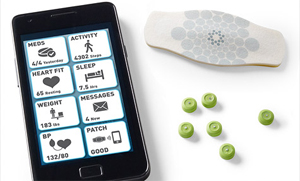
Enter the modern era of wearables and sensors. Sensor technology is going through a sort of Moore’s law type period, with personal health technologies experiencing exponential improvements. The technology is becoming cheaper, smaller, easier to power, etc. The most mainstream example of how this can affect health care are the systems that combine continuous glucose monitoring with insulin pumps in type I diabetes (so-called artificial pancreas).

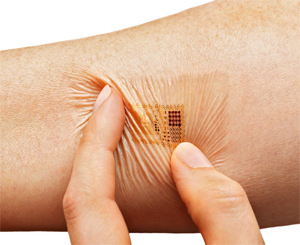
The sensor industry is exploding with interesting innovations. Boston-based MC10 can put sensors and associated electronics into a flexible substrate allowing for devices the size and thickness of a postage stamp to be employed in vital sign sensing.


OMsignal is weaving sensors into fabrics enabling a t-shirt that can sense all manner of vital signs.


Quanttus has technology enabling continuous blood pressure monitoring in a wrist-worn device. Proteus Digital Health has an ingestible radio chip that enables true tracking of medication adherence.


With all of the attention to nano technologies, it is not farfetched to imagine sensing of phenomena such as the level of cholesterol in the blood.

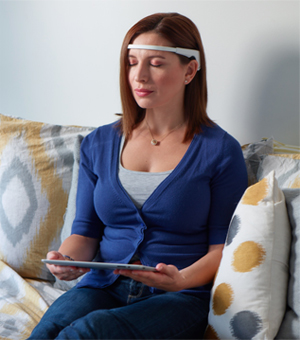
Are there examples of products on the market today that bring this vision to life? I can think of three. The Muse, by InteraXon, is a wearable EEG device that enables biofeedback and enhanced mindfulness training.


BioBeats senses your heartbeat and uses software algorithms to create music that relieves stress.


HeartMath uses a wearable sensor to give you biofeedback on your heart rate and improves focus, mindfulness and stress response.


So what if high blood pressure was like a broken arm? Think how health care delivery and prevention would change. With the evolution of new sensors, we will be finding out in our lifetimes. Imagine, with me, how this is going to change health and wellness in the future.

This article originally appeared on the Connected Health blog.

The Death of the Patient: Moving from 'Healthcare' to 'Health' and 'Patient' to 'Person'


By Reenita Das
Partner and Senior Vice President
Healthcare and Life Sciences
Frost & Sullivan


Today, if you speak to anyone in the healthcare world, the discussion always begins and ends with making the change to a “patient centered care model” or putting the patient at the center of the care continuum. So much so, we recently added a “5th P” – Personal Responsibility – into our healthcare model: Prevention, Prediction, Personalization, Preemption. But looking at the bigger picture, what does this mean to all of us who have lives outside of the health statistic we are, the disease percentage we’re grouped within, or the Rx number pharmacists reference to fill our prescription?

To all the organizations, affiliations, companies, universities, and even social media groups that we identify with and belong to, we are individuals.  That’s not the case in regards to our affiliation or membership with insurance providers, medical practitioners, and pharmacies. As a cultural norm, we don’t define our personal identity as, for example, a member of Aetna Health Insurance. That’s not something we’d put on our Facebook profile. So, how can we recreate our patient identity – a number, stat or percentage – to encompass who we really are?

To explore this concept further, I spoke with Dennis Robbins, Ph.D., a nationally recognized healthcare thought leader, steward and activist. He has been steering the patient-centric movement that often admonishes us for not making changes in our lives to be healthier, sleep more, be less stressed, while at the same time, realizes that as “patients,” we are passive, vulnerable, sick, wounded , subservient, and on unequal footing, which creates a huge disparity and disadvantage for the person. For those reasons alone, it is critical to change the dialogue from “patient” to “person.”

For more, continue reading on Forbes.

Wednesday, October 1, 2014

Technology Integration and Industry Convergence: Bioinformatics, Patient-Empowered Point of Care, and Beyond


In this session from Medical Technologies 2014: A Frost & Sullivan Executive MindXchange, panelists discussed value-driven healthcare and how to use big data, providing insights on the challenges and opportunities posed by the evolution of healthcare, focusing on emerging markets, handling mass amounts of data, and funding innovative R&D.


MODERATED BY
Amir Jafri, Principal Partner, Executive Vice President, Netspective Communications

PANELISTS
-Joseph Boystak, Co-Chairman, Bessor-Brightwaters Pharma, Chief Executive Officer, Brightwaters Capital
-Robin Farmanfarmaian, Vice President, Strategic Relations, Singularity University
-Sanjay Shrivastava, Director, Global Marketing, Covidien
-Barbara Sosnowski, Vice President, External R&D Inflammation, ERDI Lead WRD External Partnerships, Pfizer
-Richie Etwaru, Group Vice President, Digital Innovation, Cegedim


TAKE-AWAY


The major challenge facing big data in the medical technology world revolves around the question of what to do with the data. The information is there, but it’s important to build a model that can verify and validate the data for actionable use in medicine.

BEST PRACTICES


Technology needs to create analytic systems that can properly interpret data given through information avenues, and companies must develop ways to apply it and use it.

ACTION ITEM(S) TO IMPLEMENT


Medical technology companies must focus on devices that enable patient engagement, rather than just those used for record-keeping. Success in the changing world of healthcare will require developing products that can disseminate information provided by patients and make the information actionable. The goal must be to engage patients to participate in their own care.

TAKE-AWAY


Like they are in other fields, strategies and business models in the medical world are moving toward a more data-centric focus, with the goal of conducting healthcare in a more efficient and precise manner. The medical device industry must examine what its role is in that major paradigm shift, the panelists said.

BEST PRACTICES


Companies should look to develop new technologies to compile and acquire actionable data in order to allow healthcare industries to do what they do in a more proficient and nimble manner.

Medical device companies should begin to look into emerging markets and areas that serve countries such as India and China. Focus on these markets, which have a potential to be as vast as the domestic market.

ACTION ITEM(S) TO IMPLEMENT


Companies should begin to actively engage with the worldwide medical community in emerging markets like India and China. Open dialogue with physicians in those countries can show how they are looking to do things and what technology they need so they can provide better care for their patients.

TAKE-AWAY


Of course, new products require new capital. That’s why there must be collaboration with investors and others to determine the exact cost of developing new products throughout the world.

Only about 10% of the 3 billion people who live in China and India can afford the healthcare that Americans can. That means there are opportunities to find innovative and cost-effective solutions and increase access for people around the world.

BEST PRACTICES


Accumulating data should be the first step in this process, according to the panelists. Look for solutions to treat, manage, and prevent diseases where there currently aren’t any solutions.

Opportunities for research exist in:

  • The decentralization of medicine
  • Value-based healthcare
  • Remote monitoring and wireless applications
  • Individualized health and therapeutics
  • Actionable data
  • The notion of competency and educational aspects
  • Patient compliance and engagement

Companies should take the data, partner with different groups, and work toward analyzing and interpreting the data.

Money can be brought in through partnerships and investments, with patient advocacy as a driver. Companies should look for partners in non-medical sectors, such as telecommunications.

ACTION ITEM(S) TO IMPLEMENT


Companies can launch ventures to acquire funding for new medical technology devices to bring big data to the healthcare system. Those tools must have the ability to analyze information and make it useful for physicians and patients.

Corporate innovation exchange programs with Fortune 500 companies allow small businesses to learn from large corporations and vice versa.

FINAL THOUGHT


For big data and new technology to thrive in the evolving medical world, technology companies must find ways to make data actionable and prove the benefits for the cost and quality of care.

For more valuable information, download Frost & Sullivan's Executive MindXchange Chronicles: Medical Technologies 2014, a unique collection of all the key take-aways and best practices discussed at the event

New Growth Momentum for Private Hospitals in China?


By Ngan Yin Lai
Industry Analyst, Malaysia
Frost & Sullivan

The recent price deregulation for private hospitals in China is anticipated to stimulate new growth momentum for the sector. Post the deregulation, private hospitals have been allowed to set prices for medical services based on the principle of fair and free market competition. In addition, qualified private hospitals will be included in public health insurance schemes, similar to public hospitals. This write-up analyses the extent to which these new measures will facilitate the growth of private hospitals in China.

The Current State of China's Private Hospitals


Since 2008, China's private hospital sector has been experiencing strong growth. The number of private hospitals has increased from 5,403 in 2008 to 11,432 in 2014 (as of February), accounting for 46% of the total hospitals in the country. Outpatient volumes grew at a compound annual growth rate (CAGR) of 15%, and inpatient volumes grew at 20%, from 2008 to 2013. Although private hospitals experienced double-digit growth in patient volumes, the sector contributed only 10% of total patient volumes in 2013. Further, most private hospitals are small in size (98% of the hospitals have a bed size that is less than 500). In 2012, the number of beds for private hospitals was 582,177 (15% of the total hospital beds), and this number reached 677,000 (estimate) in 2013.

Chart 1: Hospital Outpatient Volume, China, 2008 & 2013 and Hospital Inpatient Volume, China, 2008 & 2013


Under the 12th Healthcare Reform Plan, the government aims to increase the role of private hospitals in the provision of healthcare service - private hospitals will account for 20% of total hospital beds and patient volumes by 2015.

Based on a 7.6% CAGR, the number of hospital beds will reach 5,184,000 by 2015. Based on a 7.7% CAGR for total outpatient volume and a 11.7% CAGR for total inpatient volume, total outpatient and inpatient volumes will reach 3,223 million and 178.96 million, respectively, by 2015. In 2 years, private hospitals will need to increase the number of beds to 359,800, and aim for 355 million outpatient volumes and 18.3 million inpatient volumes, to achieve the target.

The Path to Privatization Opens Up Investment Opportunities


Initiatives to open up the hospital sector for private capital were introduced in 1997. The Chinese Ministry of Health (MOH) stated that the government intended to relax rules for private investment in healthcare. 3 years later, the government permitted joint ventures between Chinese businesses and foreign investors in healthcare facilities; however, foreign equity was limited to 70%.

The healthcare reform agenda 2009-2020 reveals the firm stance of the government to encourage private investment in healthcare. Reforms have been put in place in the past few years - (i) allowing 100% foreign equity by removing the foreign investment in healthcare services under the restricted category of the Catalogue of Industries for Foreign Investment, effective 2012 and (ii) business tax exemptions.

The most recent measure to draw private capital into the hospital sector is to allow private hospitals to set their own prices for medical services and to enroll qualified private hospitals into public health insurance schemes.

This will make investing in the hospital sector more attractive as it will enable private hospitals to earn higher margins for the specialized services they offer. Many private hospitals are specialty hospitals, as the entry barrier is lower than that of general hospitals. Tapping on their strength to provide high-quality medical services and advanced technologies, private specialty hospitals cater to the healthcare needs of the burgeoning upper middle class who can afford the high prices. More than 75% of the urban population will reach an income level of $9,000 - $34,000 by 2022*. This huge potential purchasing power will create high demand for the specialized care offered by private hospitals.

The measure for enrolling private hospitals into public health insurance schemes will work as a double-edge sword for private hospitals. Being entitled to the coverage of public health insurance will encourage the general public to utilize healthcare services at public hospitals. On the other hand, private hospitals will need to conform to the prices for medical services, drugs, and medical examinations that are set by the National Development and Reform Commission once they are entitled to the reimbursement of public health insurance schemes. This will lower the profit margins of private hospitals.

The public health insurance authority will have to relax some of the requirements for private hospitals to qualify for reimbursement. For private hospitals to be included in public health insurance schemes, a minimum of 50% of their services must comprise basic medical care, as listed in the reimbursement schemes. Many private hospitals will not be able to meet the requirement because they are specialty hospitals and many of the services offered are not covered by the reimbursement schemes.

Challenges for Investing in Private Healthcare


While the prospect of investing in the hospital sector is encouraging, private capital investments in the sector will face 2 major challenges. Private hospitals have not been able to recruit experienced and skilled doctors. Most doctors prefer to work at public hospitals that provide better benefits, career advancements, and reputation. The absence of a policy that allows doctors to practice at multiple locations prevents doctors at public hospitals from working part-time at private hospitals.

The scarcity of land in big cities is another major challenge for private investors. The current land use policy provides land at low cost to public hospitals only. Private hospitals will have to absorb huge (and rising) costs for land lease, which will lead to escalating operating costs.

The latest wave of measures signifies a step forward in encouraging private investments in the hospital sector. Private companies interested in investing in the hospital sector should carefully study the intricacies of the market - policies play out differently across provinces in China due to differences in provincial politics and implementation. Investors should come up with strategies that fully utilize their strengths and core values.

Note: * McKinsey Quarterly (June 2013). Mapping China's Middle Class

Emerging Markets: Narayana Health’s Growth and Technological Innovation


An interview with
Dr. Ashutosh Raghuvanshi
Vice Chairman, Managing Director &
Group Chief Executive Officer

Narayana Health

By Sam Narisi


Over the past several years, India’s Narayana Health has experienced tremendous growth. After beginning in 2001 as a 225-bed hospital in Bangalore, Narayana became a two-hospital system in 2007 and since that time has grown to include 27 facilities in 16 different cities.

Even more growth is on the horizon, as Narayana aims to continue feeling India’s need for affordable high-quality healthcare. “There is a big gap between the supply and demand for high-quality care in India,” said Dr. Ashutosh Raghuvanshi, Narayana’s Vice Chairman, Managing Director & Group Chief Executive Officer.

Technology has played a big role in Narayana’s growth, helping the organization both reduce costs and expand its patient reach. Moving IT systems to the cloud has made an especially big impact, according to Raghuvanshi. Using cloud-based IT services allows Narayana to pay based how much is used, which has allowed for significant cost reductions.

Remote consultations


In addition, the move to the cloud has allowed Narayana to integrate and consolidate patient data from across the entire system. That’s made it possible to treat patients remotely, and with fewer specialists on staff. For instance, a patient can have imaging done in one hospital, and the results can be viewed by a specialist in a different facility. “We don’t have to have a specialist in every location,” Raghuvanshi said. “We can treat many patients effectively without have a large number of these specialists.”

Narayana is also offering more telehealth services, which is critical in giving access to high-quality, low-cost care to as many people as possible despite economic and geographic boundaries. In addition to its hospitals, the organization now runs a number of e-health clinics patients can also visit.

Those clinics are staffed by a paramedical workforce, so Narayana doesn’t necessary need physicians on site. Patients can have some diagnostics done at one of those locations and then visit a main hospital if necessary.

Again, this allows Narayana to treat more patients with a limited staff of specialists. Despite employing the largest number of doctors in India, the organization still faces an overall shortage of medical professionals in the country. In addition to expanding the reach through technology, Narayana has also invested in a teaching hospital to develop more skilled clinicians.

Narayana also uses those e-health clinics to track disease patterns and help improve overall population health. With all patient data collected in electronic health records, the organization is able to analyze that information to discover trends and detect outbreaks and other incidents.

Technology is key


Moving forward, Narayana will continue adopting new technology to help fulfill its missing of providing affordable high-quality care. “Technology is the only tool that can help keep the costs in the range that people in these areas can afford,” Raghuvanshi said.

This includes expansion into biotechnology, as well as greater use of clinical decision support, particularly for the hospitals’ nursing staff. By using those tools, Raghuvanshi said, nurses will be aware of available treatment options without having to do too much analysis on their own. That will help to standardize treatments, as well as increase accountability and the quality of care.

While there are some challenges that come from operating a healthcare organization in a country like India, Raghuvanshi said, those conditions also lead to some great opportunities, especially when it comes to technological advancement and innovation.

The environment in India and other emerging markets is typically less restrictive compared to other places. “The regulations and restrictive environment that exist in other places is not there,” Raghuvanshi said. “That is an advantage to help us innovate on the technology front.”

Also, in the US for example, the system is very payer-focused. So a lot of energy is spent developing technology that can help with better billing for hospitals, rather than with creating newer and better systems to improve the quality of care.

“Changing those legacies can be very difficult,” Raghuvanshi said. “We’re starting from a clean slate, and we are more focused on evidence-based care and emerging technology”