Monday, April 13, 2015

Leveraging Technology-Spawned Synergies to Add Years to Our Lives and Life to Our Years


By Dennis Robbins
Chief Clinical and Business Intelligence Officer
KPN, Dallas


Today’s literature is filled with articles reminding us how unhealthy lifestyles are making us sicker. Technology is held out as a potential panacea to help us out of this quagmire. While I trust that technology can make a huge difference, if we truly wish to improve the life of the person, a multifaceted approach employing diverse yet complementary devices and solutions is optimal. 

For example, a device monitoring A1C's for diabetes, while important, becomes even more powerful when that information can be seamlessly leveraged for improvement by engaging and activating the person towards a healthier life and lifestyle. We will never achieve that by becoming a patient. Patients are passive, wounded, sick, vulnerable, subservient and on unequal footing. Yet we label patients as non-adherent, non-compliant, and non-accountable. If the patient is passive why would we expect them to be anything else? As a patient, things are “done to me.” Accountability compliance and adherence are all passive demands made by others yet only I as an active agent can make a difference.

It is the “person” not the patient who can change but only when they find something to be sufficiently meaningful to stimulate, promote or sustain change. The central pivot or regulating fulcrum is the degree of meaning and value to the person. That is the foundation for true and effective engagement, activation and positive change. Each person is different; it is not a one size fits all enterprise. In fact, despite the most sophisticated trends, robust metrics, and past experience we are frequently surprised if not astonished by disparities regarding what we thought someone wanted and what they really wanted. Furthermore, no one knows the person better than the person him/or herself. Each of us knows our hot buttons as what is truly most important and meaningful to us. 

Perhaps the very agnosticism of devices and technologies that impose no attitudes or admonishments makes them so attractive. They can inform us, warn us, and help us achieve meaningful goals. Augmenting artificial intelligence technology in the form of avatars such as that employed by the Spokane based company NEXT IT or virtual coaching and supportive technologies of NOOM out of NYC and various forms of behavioral economics based nudging can be a great source of knowledge, guidance, support and inspiration. These can help shape the value equation for the person, essentially, what value or meaning a person assigns to a bit of information that motivates him/or to take that extra step towards positive outcomes. It is of utmost importance to be sure that we design for the goal at hand and make it achievable and not daunting or overwhelming. Moreover, we must take care and be vigilant to clearly articulate the value equation and the reminder that small changes can make huge differences. 

The fact the technology and devices are agnostic with no attitude is quite attractive. They just tell me what I need to know to help shape my decision-making and help me define an action plan.
They don't force me to become passive, subservient, or helpless rather, they serve as the substrate or foundation for decision-making and behavioral change. It is ultimately me who must choose and change for the better. It’s not about my relinquishing my control or responsibility to someone external or alien to me. And I do whatever I do as a freethinking person consistent with my personal choices, values and preferences. I can choose to be a vanguard or victim since I am the only one ultimately who can make a difference in my life and future.

Thus, if we can only make and activate changes in our lives as persons, then empowering the person through information, technologies, devices. support systems, and mobile solutions is a great way to initiate the process of behavioral change that is self-directed, self-driven and personally meaningful. Patients don’t change, take ownership or self-determine their futures and destinies; people do! The prescription for health centers on meaningful changes in behavior in concert with person-centric solutions. Person-centricity™ moves beyond models of consumer/patient empowerment, centeredness, engagement, and activation, and is reflective of how individuals make decisions within the broader context of their lives. This fresh paradigm accounts for the complexity and comprehensiveness of who we are and what we can become. 

The relationship between the notion of person-centricity and the transition from healthcare to health is symbiotic and functions both as the missing link and the common thread that weaves together the needs, choices and aspirations of people throughout their health and lives. This shift is critical and a necessary part of every aspect of our transition from healthcare to health and to bending the sickness curve to better curb and control avoidable costs, promote and sustain health while reducing unwanted lifestyle-related diseases and illnesses.

Dennis Robbins is prominent 
health care steward, innovator, thought leader, entrepreneur and health activist. and is Chief Clinical and Business Intelligence Officer at KPN in Dallas and an advisor to Sanovas in the San Francisco Bay area.


“Where is the Maestro?” Emerges as Recurring Theme at the 20th Anniversary Medical Technologies Frost & Sullivan Executive MindXchange


By Venkat Rajan
Principal Analyst
Frost & Sullivan


During his keynote, Dr. Joseph Smith, Chief Medical Officer and Chief Science Officer of West Health, drew a parallel between the healthcare industry as an orchestra with a number of brilliant practitioners, but lacking in the guidance of an authoritative conductor to synchronize individual efforts towards producing coordinated music.


That sentiment seemed to encapsulate one of the biggest overriding themes of the 20th Anniversary Medical Technologies Frost & Sullivan Executive Mindxchange. Over 2 days of interactive sessions on March 9-10 in San Diego, CA, speakers and thought leaders highlighted the various degrees to which the market many within the healthcare industry thought they once knew, is now being overhauled. 


“Inter-operability and Coordination”


Beyond his orchestra metaphor, Dr. Smith used the practical example of how newer automobiles are able to seamlessly use sensors and information towards collision avoidance, lane assistance, automatic breaking, automatic parallel parking, and other automated features. Those technologies help drivers mitigate user errors and provide warning about potential mechanical malfunctions.
In contrast, when it comes to the healthcare field, the introduction of a host of new devices and technologies has from his perspective, forced nurses and clinicians to be managers of technologies and synthesizers of information. Now these trained health professionals must ask themselves:

  • What are the different monitors telling me about the health of my patient? Which ones are more important? How do I distinguish trends from anomalies
  • How do I correlate readings from the various biometric monitors with to adjustments in treatment levels in another device (respirator, infusion pump, etc)?
  • What is the appropriate level of response to various alarms?

This overburden not only draws time and attention away from patient -centric care, it also can be traced to the high rates of errors and avoidable mistakes that occur in care provision. In an outcomes-based compensation model for care, those errors are not only clinical issues they are also financial liabilities to the facility.


Ideally, if there was greater inter-operability between the various medical technology systems, the information captured and responses would be more automated and would enable care givers to more easily perform their responsibilities, as opposed to encumbering them.

As with many of the challenges plaguing the healthcare system, moving from theoretical solutions to practical applications can be a complex and protracted process. This process requires buy-in from a wide range of stakeholders, who typically are not accustomed to working with external entities. Medical device developers rightfully can point the finger at a lack of clarity from regulators, a lack of openness in the IT systems of EHR vendors, and a lack of willingness to pay for those added functionality and services from providers.

From talking to many of the attendees at the event, it is clear that the vast majority of their organizations are willing to explore and collaborate on developing innovative solutions.

Garry Fingerhut, Executive Director of Cleveland Clinic Innovations, seemed to affirm how the imperative for some of these transformations has influenced how organization evaluate and foster innovative ideas from their specialists. A retrospective of start-ups their organization has developed and spun out seemed to capture that shift over the years from more treatment centric tools and implant technologies to more information and analytics based solutions in recent years.

It’s not that these issues have not been tackled previously; attendees noted initiatives from the past that were launched to a great deal of hype but lacked the requisite momentum to gain traction.
Accordingly, an interesting question arises as to, what makes more recent developments any different than those previous missteps?

The answer, based on insights provided by other speakers, is quite possibly, timing. Timing in the sense that providers themselves are undergoing a significant reformation of how they are compensated for their services.  That in fact brings us to the second major overarching theme of the event, which is as providers continue the evolution towards value-based care models….. how do vendors work with them?

Outcomes Based Care and Vendor Positioning of Value 


With Dr. Steven Merahn , Chief Medical Officer for US Medical Management, providing the provider perspective and  Dr. Michael Dahlweid ,Vice President and General Manager, Solutions at GE Healthcare, providing the vendor perspective, attendees at the event got a comprehensive overview of the customer-centric  ideas and strategies technology developers are using to create solutions that address the needs of their customers.

Dr. Merahn highlighted many of the innovative approaches their organization has implemented to move our current care paradigm closer to one of disease management and value-based care. Rather than making incremental changes, their organization developed from the ground up the infrastructure and skill sets it needed to be successful in this novel model. Where others saw risks, their team saw opportunities for innovation.

In the previous fee-per- service model, there was a fairly straight- forward means for vendors to equate the price of their technology to the diagnostic test or procedure being performed. However, in this new model, the specific tool or combination of technologies used towards better care are secondary to the resultant outcomes. Dr. Dahlweid outlined a very deliberate and structured process by which medical technology developers could assess the rational for transitioning into outcomes (i.e. risk) based contracts with their customers. From the perspective of GE Healthcare, he was able to share some valuable insights into their thought process, case studies, and even in some cases the internal challenges a company might face in getting approval for launching such initiatives.  One interesting nugget that was gleaned, is that risk based contracts might not necessarily be for everyone. In cases where there isn’t a tangible metric that vendors could track, trend, and most importantly monetize, some concluded that an organization might be better served exploring other approaches for business model evolution.

Conclusion 


A key topic discussed during one of the interactive sessions, addressed the issue of industry convergence and risks of market obsolesce.  Participants highlighted the case study of Uber, and how this innovative IT based solution was able to take on the highly regulated and capital-intensive taxi cab industry. Similarly, in the healthcare space,  a key question was asked: How can participants avoid being a victim of disruptive innovation themselves?

Ultimately, I believe the key take away from this year’s event might be that while the forthcoming change is inevitable to healthcare, the strategies and approaches by which companies will react to those disruptions will be critical to the long term resiliency and success of their organizations.

Healthcare Beware! New Intruders are Coming – Introducing the New Gold Rush


By Reenita Das

Partner and Senior Vice President
Healthcare and Life Sciences

Frost & Sullivan


As the healthcare industry is transforming and becoming more consumer driven, the “5 Ps” are becoming the hub of the industry: Prevention, Personalization, Prediction, Preemption and Personal responsibility. As a result, there is a rush of new stakeholders who are entering the game and changing many of the rules. Who are these new breed of companies and what are they bringing to this industry? How are they transforming the way healthcare is practiced?


Social Media, IT Companies and Telecom: Shifting the Balance of Power

The foundation driving change in regard to how providers and patients interact and how medicine is practiced is "information technology."  We have witnessed a whole generation of content providers and social media companies – from Google, Facebook and Twitter, to Web MD and many more – that are playing the role of democratizing this data and taking it a step further by building consumer participation and responsibility into the mix.

Healthcare is a largely untapped market for specialized telecommunications systems with a strong immediate potential; therefore, it presents a handsome alternative revenue stream for this group. Telecommunication companies – or “telecoms” – are striving to customize their traditional offerings to meet the unique requirements and regulatory standards of the healthcare industry. These range from providing connectivity for enterprise mobility, asset management and exchange of health data in various formats; platforms for healthcare IT tools; mobile apps for physicians and healthcare professionals; all the way to patient engagement solutions.

At the consumer level, the telecommunications industry is targeting the increasingly health-conscious consumer with mobile apps that support education, health and wellness, patient monitoring as well as mobile communication.  On a larger scale, telecoms will eventually look toward creating a connected community or a “smart city” of which healthcare will be one component.

We are also waiting to see if media companies will seriously enter this space for the long haul. Time Warner Cable recently announced the “Virtual Visit” program, implemented via Cleveland Clinic's Center for Connected Care, whereby patients will be able to interact with their doctors via an encrypted two-way video without leaving their home. This product will be offered as a bundled service consisting of connectivity installation, customer premises equipment (modems and video conferencing equipment), and technical support in patients’ homes.

There are other cable companies in addition to Time Warner Cable that are entering this space such as Cox Communications and Comcast who are doing similar pilots and seeking additional revenue streams from healthcare. The competition is heating up with AT&T’s recent announcement to acquire DirecTV leading to more consolidation among internet and TV providers.  Should we now expect Google who, recently has been making moves to acquire gaming companies, to gear toward healthcare tech companies? Google has been trying to reinvent themselves and move outwards laterally for a while now.

Digitization of Health Draws Sensor/RFID Co.’s & Consumer Electronics into the Foreground

As healthcare moves toward a model of constant monitoring and feedback based on “on-demand, anytime, anywhere” concepts, sensor technology will drive the revolution of mobile health to the next frontier as it becomes more  available, visible and usable to people everywhere. Readings from sensors can be used in many facets of healthcare and disease prevention. Apart from regular monitoring, we can use sensors to track the emergence of disease, detect exposure to harmful environmental elements, or even predict the likelihood of developing health problems based on patient medical records, family health history and public health data.

Nokia held a competition in 2013 and again in 2014 called the Nokia Sensing XCHALLENGE. It is a $2.25 million global competition to accelerate the availability of hardware sensors and software sensing technology that individuals use to access, understand and improve their health and wellbeing.  The 2013 winner was Nanobiosym Health RADAR with a device that enables diagnostic testing in the palm of your hand. A drop of blood or saliva is placed on a nanochip and inserted into a mobile device. The user selects a particular disease strain from the software interface and then pushes the start button to begin. The device detects the presence (or absence) of that disease's pathogen in real-time with gold standard accuracy. These mobile diagnostic technologies are taking the laboratory to the patient – quite the reverse of where diagnostic testing has been so far. The tremendous advances in health sensing are truly game changing and will transform how doctors interact with their patients to address and solve health challenges. More importantly, it puts patients at the center of the care process and provides personalization.

As the line between health and fitness devices is blurring, every consumer electronics company – from LG to Samsung to Sony – is getting into the game. Thus begins a whole generation of wellness app companies that are now moving from the regular "step counting" outfits to more sophisticated platforms that includes building connectivity across all the stakeholders and connected to the cloud. Apple’s newest foray into setting up a medical technology division and focusing on building a healthcare playbook, as well as its recent discussions with FDA, shows how serious they are about the healthcare space.  However, on the acquisition front, Apple is definitely a slow mover, more resistant and less aggressive than Google, so it will be interesting to watch their technology acquisition strategy in regards to healthcare.

Direct to Consumer Testing Brings a Potpourri of Others

I believe the age of "direct to consumer testing" has already begun with devices such as the electrocardiogram monitor that can be carried in your pocket or the ability to take a hearing aid or eye test at home. This has heralded the advent of retail grocery and drug stores offering a “one stop shop” for diagnostic testing, monitoring and coaching. Global giants like the “Walmarts” and “Walgreens” of the world are clamoring to take control of the consumer as quickly as possible and provide a full service solution that can be personalized on demand. These consumer-facing testing devices are becoming the gateway to personalized medicine as they can aggregate data in a continuous contextual fashion. It then can be connected through the cloud to a supercomputer like IBM’s Watson to provide insights into not just your health but also your personal potential. In the future, we will have personal avatars that will help us reach our potential by way of coaching and motivation.

The Supply Chain is Growing More Complex

Outside of the coterie of healthcare products and service-type companies, we are also witnessing a complex supply chain emerging regarding logistics companies building their muscle and strategy for healthcare. Many of these companies like FedEx and DHL Express are already partnering with healthcare providers along the continuum of care and looking at extending their service offering beyond just distribution and logistics to build more value, consolidate cost and increase outcomes to this large diverse audience group. This implies these new entrants could start controlling more of the chain and eventually start competing with traditional pharmaceutical and medical device companies.

What do Healthcare and Hospitality Have in Common?

On a last note - healthcare and hospitality have much in common. For one, both have the same etymology. The word “hospital” comes from the Latin word “hospes,” or host, which is the root for English words such as “hotel,” “hostel” and “hospitality.” Imagine if we are treated as a guest in hospitals compared to being treated as patients. What implications does this have for healthcare providers? What does "guest-focused care" really mean?

In fact, as healthcare is becoming a consumer service industry, there are many lessons that healthcare can learn from the hospitality industry. In the future, it is expected that the hospitality industry will extend beyond recreation, leisure and wellness to healthcare services providing an end-to-end customer experience. The irony is we are already witnessing some of this by way of medical tourism. I do expect this will be a natural transition for the hotel chains of the world to enter into healthcare soon enough. Alternatively, it may be time for healthcare suppliers to push themselves out of their comfort zone and look at partners outside their traditional ecosystem rather than waiting for more intruders to attack.

Monday, January 12, 2015

Collaboration and Convergence: The Future of Medical Innovation


An interview with
Gary Fingerhut
Executive Director
Cleveland Clinic Innovations


As the Executive Director at Cleveland Clinic Innovations, Gary Fingerhut leads a team of professionals focused on commercializing technologies conceived by Cleveland Clinic Caregivers that make a real difference in improving patient care.

Frost & Sullivan recently spoke with Gary about some of the projects Cleveland Clinic Innovations is working on, as well as how collaborating across companies and industries is ultimately leading to better care. Gary will also join us to share his expertise at the 20th Anniversary Medical Technologies 2015: A Frost & Sullivan Executive MindXchange, March 18-20, 2015, in San Diego.

First, give us a little background on what Cleveland Clinic Innovations does.

Our main objectives include commercialization and technology transfer. So if you’re familiar with a typical tech transfer office, we take that to the next level and add commercialization by creating over 71 spin-off companies to date. We also have our Global Healthcare Innovation Alliance where we outsource our capabilities of commercialization and tech transfer to other organizations.

Another significant area of focus is the Medical Innovation Summit, which is our annual summit held in Cleveland with typically around 1700 global thought leaders in the area of healthcare innovation. This includes leaders such as investors, clinicians, alliances and corporate partnerships. Lastly, we have our Global Cardiovascular Innovation Center and NCAI, our NIH Center for Accelerated Innovation.

In each of our areas, we have three very simple business imperatives for why we do this. First, we want to commercialize or translate the technologies developed at the Cleveland Clinic and our Global Healthcare Innovation Alliance to the rest of the world to provide better patient care. Second, we’re a service organization, so we’re all about delivering exceptional inventor satisfaction and providing caregivers and partners with a solid and productive experience of commercialization. Then finally of course, we want to optimize some kind of financial return, so we can continue to reinvest and do more product development.

What are some of the most exciting things you’re working on?

Right now, we’re focused on four key areas, and we have a very large portfolio in each of these. The first is healthcare IT, which is growing exponentially. This includes any type of software application, digital health, and, though I hate to use the buzz word, Big Data, including a lot of clinical decision support and personalized medicine opportunities. There are also all of the digital apps in wellness arena.

The second area is devices, through our medical device incubator. About 60% of what we do is in the device space. The third is therapeutics and diagnostics. Those are usually longer-term innovations as we have a world-renowned research facility here and we get a lot of tremendous ideas from our Learner Research team.

Then our fourth area, which is relatively new from a commercialization perspective, is our delivery solutions group. That includes more process-oriented technologies. There’s a lot going on in the areas of bundled payments, reimbursement, care paths, and opportunities that enable us to do more with less.

You mentioned data in health IT. What are some of the roles data is playing in healthcare?

From an innovation perspective, we see a lot going on in the area of biometrics, wearables, and, as I mentioned, clinical decision support systems. All of this is leading into more personalized medicine and family medicine, where you’re managing the family tree and using hereditary and genomic data. The technologies are putting it all together to create a dashboard, not necessarily for a patient, but for a human, so we can do some predictive analysis prior to being a patient.

An example is one of our spin-offs, Explorys, which is our most successful Big Data venture.

There’s lot of discussion around trying to improve patient engagement and focus more on preventive care. What are some ways technology is helping move healthcare in that direction?

We have a tremendous amount of technologies in the patient engagement space. I’ll focus on one area, which is a product we have called MyFamily. It’s integrated with the EMR and tracks the patient’s family history around disease collection. That allows us to do risk stratification and bring it right to the point of care. It’s a clever technology that basically creates an awareness of the needs of the patient so the physician and the patient can see it and reach a higher quality of care. It’s very similar to what you’re hearing around, to use another buzz phrase, “doing more with less.” It allows you to collect data, increases patient engagement, and helps with identifying at-risk patients. MyFamily is a hot digital product that we’re really excited about.

Another thing we hear a lot about is the idea of convergence, where all the different areas of health and wellness are coming together. 

That’s very well in line with our strategy and processes which we refined in January 2014. We’re now taking more of a portfolio approach to managing these technologies. Historically, a tech transfer office would create a royalty-bearing license or spin off a new company around a specific technology. We now take this portfolio approach where our incubator directors align multiple technologies and hold on to them longer to de-risk them while increasing the total portfolio value. By combining multiple technologies, not only from the Cleveland Clinic but from all of our Global Healthcare Innovation Alliance partners, we’re building a much stronger portfolio.

We align those as well as with our partners, which include Parker Hannifin, Lubrizol, NASA, IBM, and others. We can bring together the intellectual property; capital, both human and financial, while mutually translating these at a higher value and provide better patient care.

What is the role collaboration plays in what Cleveland Clinic Innovations does?

We’re aligned to be the best partner in healthcare. That’s one of our goals. We’ve aligned ourselves with leaders in multiple industries, some of which you would not expect to be in the healthcare space. One example is Parker Hannifin’s fluid dynamics group. We’ve aligned with them because after all, it’s not unlike the human body. We’re able to take areas of their intellectual property that haven’t been applied to healthcare and, vice-versa, find areas of healthcare where they can take advantage in their other verticals.

We’ve done this in multiple areas. We’re also aligned with telecom companies that bring components that they have from an infrastructure perspective – they may have, say, a HIPAA-compliant cloud – that we can then leverage in healthcare. We also have our relationship with IBM in the Watson initiative, where were we take IBM Watson to medical school and teach Watson how to read the EMR. These are examples of creating new relationships that haven’t been developed in the past and embedding them in technologies that can eventually go to the bedside.

It’s really a tremendous opportunity; providing technologies to enable better patient care and make a difference in the world. It’s really a very exciting time for Cleveland Clinic Innovations.

Thursday, January 8, 2015

Patient Engagement and Adherence: New Technologies, New Opportunities


Bringing value in a new world of healthcare will require engaging both patients and providers into recognizing patterns for enhanced clinical engagements. New medical technology tools can expedite the exchange of information and enhance patient engagement. In this excerpt from Frost & Sullivan’s Executive MindXchange Chronicles: Medical Technologies 2015, Dana Webster of Roche Diagnostics discusses the importance of meaningful discussion between patients and providers and how technology can help.


SESSION
Patient Engagement and Adherence: New Technologies, New Opportunities

PRESENTER
Dana Webster, Marketing Manager, Medical Values, Roche Diagnostics

TAKE-AWAY


The top 1% of patients in the US account for about 25% of all health expenditures, Webster said. The current system relies on younger, seemingly healthy patients to cover the costs of those who need more care. Unfortunately, the system doesn’t incentivize people to get preventive assessments.

The industry must make adjustments at all levels to adapt to the changing healthcare landscape, changing customers, and more informed patients. According to Webster, the key drivers affecting healthcare today include:

  • Healthcare reform – Extensions and revisions to the law occur constantly.
  • Accountability – That currently rests on the shoulders of the providers and the payers, but there’s a need to shift some accountability to the patients.
  • Quality standards – Regulatory developments are changing the ways healthcare organizations are evaluated.
  • Reimbursement – New models are putting greater emphasis on preventive treatment and allowing for remote care delivery.
  • Technology and integrated healthcare networks – Currently, the burden falls on the patient to convey all medical information to doctors across networks. That data needs to be more easily accessed.
  • Consumers – People don’t have the same interest in healthcare that they have in technology, such as the latest smartphones and fitness apps.

BEST PRACTICES


That last point is key for medical technology companies to understand. There are increasing opportunities to increase patient engagement with mobile apps.

In addition to more engaged patients, there are some other potential benefits well-designed mobile apps might have for providers:

  • Access to real-time patient information
  • The ability to automatically load data collected with the app in an electronic health record (HER) system
  • The availability of information for back-end analysis
  • Increased opportunities to communicate with patients

ACTION ITEM(S) TO IMPLEMENT


Those apps can include, for example, testing reminders to increase participation in preventive care. To have a positive impact, Webster said, those applications should make it easy to transmit data to healthcare providers and provide multiple views of information using charts and graphs. Apps should also be able to send data to cloud-based portals to facilitate easy sharing of information, Webster said.

Despite the benefits, there are also some possible downsides that technology developers will have to help providers avoid, including:

  • Patients who are currently not highly engaged may not use those apps.
  • Ensuring interoperability with other tools and systems can be a challenge.
  • There could be a potential for increased liability – for example, do providers want access to real-time information? What if they cannot manage it all? Would doctors be on the hook if they miss something within the mass of information?

TAKE-AWAY


For medical technology providers, the focus of innovation must be on bringing their customers value. The current market demands a different approach to innovation than in the past, Webster said. There is a global emphasis on creating value, increasing access, and lowering costs. Experimentation will be key to meeting those goals.

BEST PRACTICES


One of the top challenges healthcare organizations are facing is how to effectively manage an abundance of patient information. Knowledge is power, and all the information collected will be used by doctors to improve care and cut costs.

However, providers need tools to help them deal with that data. New systems need to be developed to manage hundreds of data points for each patient.

ACTION ITEM(S) TO IMPLEMENT


Tools can be created that will plot the information that’s currently in logbooks – right now the traditional way of collecting patient data – onto graphs to provide more meaningful, visual information.

Webster recommended medical technology companies start looking into major data aggregators such as IBM, AT&T, Verizon, and others in order to foster partnerships and develop ways to access and organization information. Technology providers need to find ways to properly monitor the millions of data points and how to make the information interoperable among various platforms.

TAKE-AWAY


Webster gave the example of diabetes, which is a chronic yet preventable illness. A known 18.8 million and an additional 7 million undiagnosed Americans have diabetes, totaling nearly 26 million. The economic costs of diabetes have risen 41% in five years to reach $176 billion in direct medical costs.  Diabetes management includes nutrition, activity, and medication, but there is currently no FDA-approved product that halts the progression of the disease.

For those preventable diseases, some amount of accountability needs to be shifted from healthcare providers to the patients. That will help to lower the costs of care, as well as the percentage of the population afflicted with those diseases.

BEST PRACTICES


The goal for organizations in the healthcare industry should be to accomplish these three things for both the individual and the population as a whole:

Lower per-capita cost
Improved patient experience
Improved care outcomes

ACTION ITEM(S) TO IMPLEMENT


There’s an opportunity to cut costs and improve the health of patients with diabetes and other chronic conditions. The key for medical technology companies is to start from the bottom and use technology to support active patients and productive interactions with healthcare providers.

It is imperative for new technology to come forward to actively engage patients and clinics and get them to invest in these products as actively as they are with their iPhones and other new consumer technology, Webster said. Today, the success of new technology is heavily dependent on the level of involvement by the general public. There must be a strong emphasis on reduced costs and improved health for the community as a whole.

FINAL THOUGHT


The US healthcare system is in a constant state of flux and experimentation. The evolution of the system requires embracing the need for patients, providers, and payers to access information in order to make timely, meaningful decisions.


For more valuable information, download Frost & Sullivan's Executive MindXchange Chronicles: Medical Technologies 2014, a unique collection of all the key take-aways and best practices discussed at the event.

Sensors Offer New Power to Improve Health


By Joseph Kvedar, M.D.
Director, Center for Connected Health 
Partners HealthCare 


Have you ever thought about how we evolved and the implications for health care? For millennia, we sought the help of a physician when we sensed something awry in our daily sensations. Sometimes this is as subtle as ‘I just don’t feel right,’ but sometimes it is as dramatic as an athletic injury or a tooth ache. Those latter circumstances are strong motivators to seek health care services because of the associated pain. Somewhere along the evolutionary road, we developed a nervous system with pain receptors, vital sensors that can help prevent injury. These benefits are most obvious in people with various forms of neuropathy. It is common for them to develop serious burns that they aren’t aware of; pressure ulcers, etc.

By contrast, we did not develop sensations for some equally serious health-related phenomena. For instance, the elevation of blood pressure is virtually undetectable until it gets to acute-crisis levels (hence the term ‘the silent killer’). Most folks can tolerate a blood glucose level of 150 to 200 (normal is around 100) or even higher without having much in the way of symptoms. This is why so many cases of type II diabetes go undetected years before they are picked up because of some other downstream symptom.

When you get into the realm of preventative care, it is even more curious. Though current evidence overwhelmingly supports daily cardiovascular exercise, most of us feel a very strong pull toward the easy chair or the sofa. Likewise, we can overeat slightly or overtly for years and ‘suddenly’ notice that we’ve gained 10 lbs. There is no symptom of high cholesterol, though we now know it to be a precursor of serious cardiac disease. Somehow our knowledge of pathophysiology seems to be ahead of our evolutionary development.

These latter challenges have become the bane of health care policy makers. We can’t get people to pay attention to diet, exercise and other preventative tasks because there is no symptom associated with unhealthy behavior — until it’s often too late. In fact in many cases, it seems that the unhealthy behaviors are in themselves psychologically rewarding so we are really swimming upstream here.

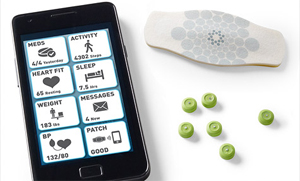
Enter the modern era of wearables and sensors. Sensor technology is going through a sort of Moore’s law type period, with personal health technologies experiencing exponential improvements. The technology is becoming cheaper, smaller, easier to power, etc. The most mainstream example of how this can affect health care are the systems that combine continuous glucose monitoring with insulin pumps in type I diabetes (so-called artificial pancreas).

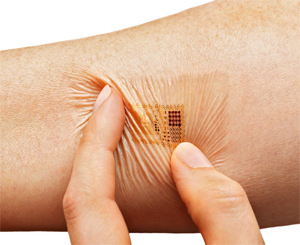
The sensor industry is exploding with interesting innovations. Boston-based MC10 can put sensors and associated electronics into a flexible substrate allowing for devices the size and thickness of a postage stamp to be employed in vital sign sensing.


OMsignal is weaving sensors into fabrics enabling a t-shirt that can sense all manner of vital signs.


Quanttus has technology enabling continuous blood pressure monitoring in a wrist-worn device. Proteus Digital Health has an ingestible radio chip that enables true tracking of medication adherence.


With all of the attention to nano technologies, it is not farfetched to imagine sensing of phenomena such as the level of cholesterol in the blood.

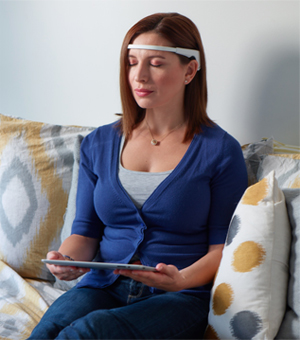
Are there examples of products on the market today that bring this vision to life? I can think of three. The Muse, by InteraXon, is a wearable EEG device that enables biofeedback and enhanced mindfulness training.


BioBeats senses your heartbeat and uses software algorithms to create music that relieves stress.


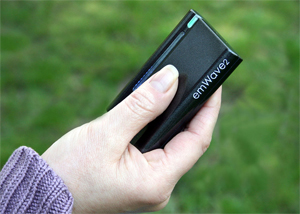
HeartMath uses a wearable sensor to give you biofeedback on your heart rate and improves focus, mindfulness and stress response.


So what if high blood pressure was like a broken arm? Think how health care delivery and prevention would change. With the evolution of new sensors, we will be finding out in our lifetimes. Imagine, with me, how this is going to change health and wellness in the future.

This article originally appeared on the Connected Health blog.

The Death of the Patient: Moving from 'Healthcare' to 'Health' and 'Patient' to 'Person'


By Reenita Das
Partner and Senior Vice President
Healthcare and Life Sciences
Frost & Sullivan


Today, if you speak to anyone in the healthcare world, the discussion always begins and ends with making the change to a “patient centered care model” or putting the patient at the center of the care continuum. So much so, we recently added a “5th P” – Personal Responsibility – into our healthcare model: Prevention, Prediction, Personalization, Preemption. But looking at the bigger picture, what does this mean to all of us who have lives outside of the health statistic we are, the disease percentage we’re grouped within, or the Rx number pharmacists reference to fill our prescription?

To all the organizations, affiliations, companies, universities, and even social media groups that we identify with and belong to, we are individuals.  That’s not the case in regards to our affiliation or membership with insurance providers, medical practitioners, and pharmacies. As a cultural norm, we don’t define our personal identity as, for example, a member of Aetna Health Insurance. That’s not something we’d put on our Facebook profile. So, how can we recreate our patient identity – a number, stat or percentage – to encompass who we really are?

To explore this concept further, I spoke with Dennis Robbins, Ph.D., a nationally recognized healthcare thought leader, steward and activist. He has been steering the patient-centric movement that often admonishes us for not making changes in our lives to be healthier, sleep more, be less stressed, while at the same time, realizes that as “patients,” we are passive, vulnerable, sick, wounded , subservient, and on unequal footing, which creates a huge disparity and disadvantage for the person. For those reasons alone, it is critical to change the dialogue from “patient” to “person.”

For more, continue reading on Forbes.